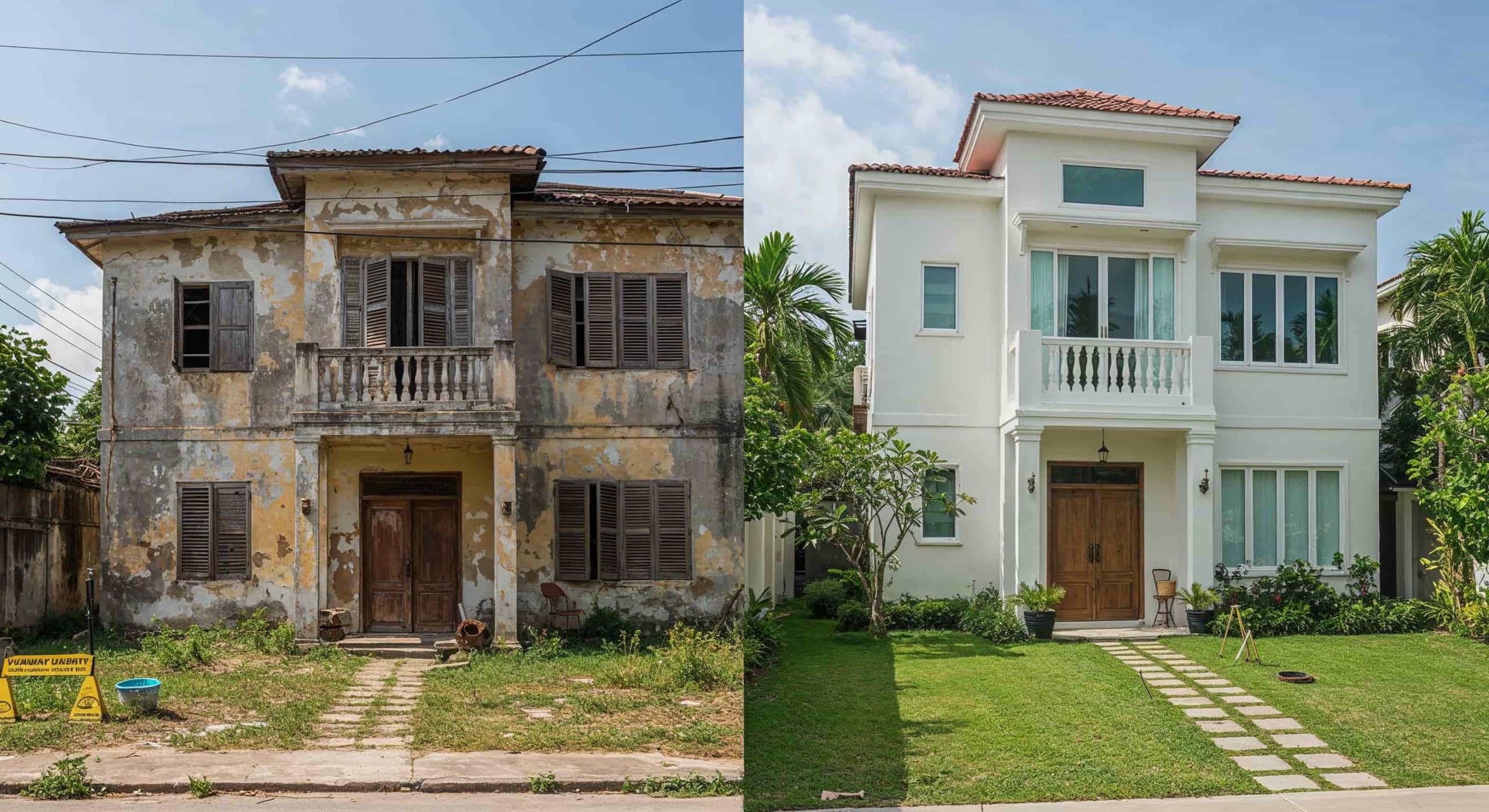
House flipping involves purchasing undervalued properties, renovating them, and selling them for a profit. Pattaya, located on Thailand’s eastern coast, is easily accessible from Bangkok and has emerged as a prime market for this strategy due to its booming tourism sector, growing expat community, and infrastructure developments. According to the Pattaya Property Report, foreign buyers account for 35% of all property transactions in the city, with a 12% year-on-year increase in demand for renovated homes. This article explores why Pattaya, Thailand, is ideal for house flipping, outlines a step-by-step strategy, highlights risks, and ways to mitigate them.
Why Pattaya is Ideal for House Flipping
Strong Rental and Resale Demand
Pattaya’s property market benefits from high demand from a diverse buyer pool of expats, retirees, and tourists. Key drivers include:
- Rental Yields: Properties in prime areas (e.g., Jomtien, Pratumnak) generate 6–8% annual rental yields, making them attractive to investors (Thai Real Estate Insights, 2023).
- Quick Turnaround: Well-renovated homes sell 30–50% faster than outdated ones, with an average resale period of 3–6 months in high-demand zones.
- Tourism Boom: With 9 million annual visitors, short-term rental demand remains robust (Pattaya Tourism Authority, 2023).
Affordable Entry Prices
Compared to Bangkok, Pattaya offers lower entry-level house prices with higher ROI potential. Property Market Trends notes that entry-level houses start at THB 2.5M–4 million, compared to THB 5–8 million for similar properties in Bangkok. It is also noted that renovated properties can increase resale value by 20–30%.
Government Incentives and Infrastructure Growth
New infrastructure projects, such as the high-speed rail linking Pattaya to Bangkok, and tax incentives for foreign investors, like the reduced transfer fees and leasehold incentives for properties under THB 10 million, are boosting the market.
Location and Accessibility Offerings
Situated on Thailand’s eastern coast, Pattaya City Center enjoys excellent accessibility from Bangkok via major highways and public transport systems. This convenience makes it a preferred destination for weekend travelers, both domestic and international. The city boasts a diverse range of attractions, including clean beaches, exciting water activities, theme parks, bustling shopping centres, and a lively nightlife scene. These offerings drive consistent tourist traffic, supporting Pattaya’s economy and strengthening its real estate sector.
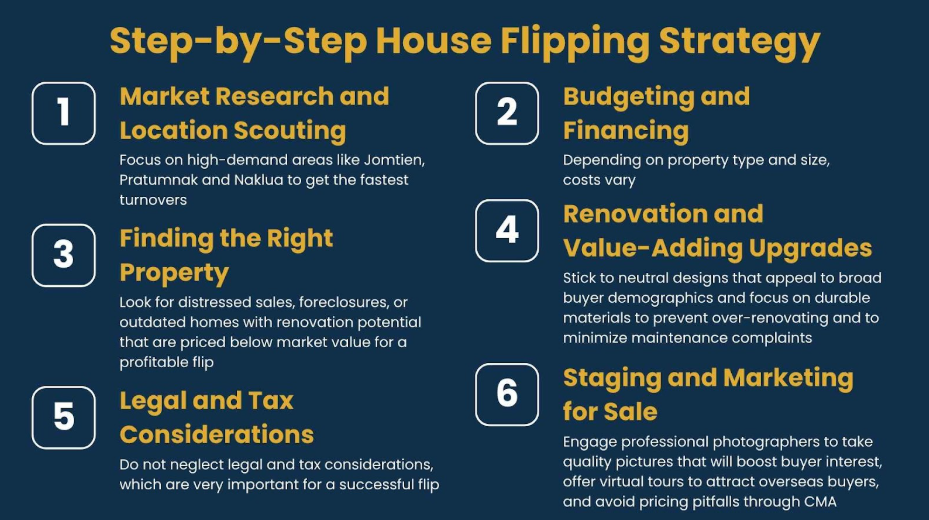
Step-by-Step House Flipping Strategy
Step 1: Market Research and Location Scouting
Focus on high-demand areas like Jomtien, Pratumnak, and Naklua to get the fastest turnover rates.
Focus Areas:
- Jomtien: High demand from retirees and long-term renters.
- Pratumnak: Popular among expats and luxury buyers.
- Naklua: Emerging as a hotspot for mid-range flips.
Key Metrics to Analyze:
- Average Days on Market (DOM) for resales.
- Rental occupancy rates in the area.
- Future infrastructure projects that could impact value.
Step 2: Budgeting and Financing
Costs vary depending on property type and size, but typically include the initial purchasing price, renovation, holding costs, and marketing fees if necessary.
Financing options include:
- Thai Bank Loans (for foreigners with work permits).
- Private Investors (common for quick flips).
- Self-funding (ideal for minimizing debt risk).
Step 3: Finding the Right Property
Look for distressed sales, foreclosures, or outdated homes with renovation potential that are priced below market value, making them a strong candidate for a profitable flip.
- Distressed Sales (banks or motivated sellers).
- Foreclosures (auction platforms like Property Auction Thailand).
- Outdated Homes (good bones but need cosmetic upgrades).
Step 4: Renovation and Value-Adding Upgrades
Modern kitchens, smart home tech, and energy-efficient features attract buyers.
High-ROI Upgrades:
- Kitchen & Bathroom Remodels
- Smart Home Tech (e.g., automated lighting, security systems).
- Energy Efficiency (solar panels, insulation).
Avoid Over-Renovating:
- Stick to neutral designs that appeal to broad buyer demographics.
- Focus on durable materials to minimize maintenance complaints.
Step 5: Legal and Tax Considerations
Do not neglect legal and tax considerations, which are very important for a successful flip.
Key Issues for Foreigners:
- Leasehold vs. Freehold: Most foreigners buy leasehold (30+30 years).
- Capital Gains Tax: 15% on profits if sold within 5 years.
- Transfer Fees: 2% of property value.
Step 6: Staging and Marketing for Sale
When it comes to staging and marketing your house for sale, do engage professional photographers who can assist you in taking quality pictures that will significantly boost buyer interest. Make sure you also offer virtual tours to potentially attract overseas buyers, and use comparative market analysis (CMA) to avoid over or underpricing.
Popular Areas in Pattaya to Consider for Property Investment
1. Central Pattaya (Walking Street & Beach Road)
Property Pricing & Market Overview:
- Average Price Range:
- Condos: THB 3M–10M (beachfront units at premium).
- Houses/Villas: THB 8M–25M (limited supply, high demand).
- Target Buyers: Tourists, short-term rental investors, nightlife enthusiasts.
Why Invest Here?
- Highest rental demand (tourist hotspot).
- Strong capital appreciation due to limited beachfront space.
- Easy resale for well-located properties.
Key Considerations:
- Noise and congestion may deter long-term residents.
- Higher maintenance costs (older buildings may need upgrades).
Best For: Investors focused on short-term rentals and quick resales.
2. Jomtien Beach (South Pattaya)
Property Pricing & Market Overview:
- Average Price Range:
- Condos: THB 2M–7M (newer developments).
- Houses/Villas: THB 5M–15M (family-friendly compounds).
- Target Buyers: Retirees, long-term expats, families.
Why Invest Here?
- More relaxed atmosphere than Central Pattaya.
- rowing infrastructure (new condos, hospitals, international schools).
- High occupancy rates for long-term rentals.
Key Considerations:
- Slightly lower tourist demand compared to Central Pattaya.
- Oversupply of mid-range condos in some projects.
Best For: Buy-to-let investors and expats seeking quieter living.
3. Pratumnak Hill (Luxury & Expat Haven)
Property Pricing & Market Overview:
- Average Price Range:
- Condos: THB 5M–20M (luxury sea-view units).
- Villas: THB 15M–50M+ (gated communities).
- Target Buyers: High-net-worth individuals, Russian/Chinese investors.
Why Invest Here?
- Prestigious address with panoramic sea views.
- Strong resale value for premium properties.
- Low supply, high demand in the elite villa market.
Key Considerations:
- Steep hills may limit accessibility for some buyers.
- Higher property taxes for luxury units.
Best For: Luxury flippers and wealthy expats.
4. Naklua (Up-and-Coming Family Area)
Property Pricing & Market Overview:
- Average Price Range:
- Condos: THB 1.5M–4M (budget-friendly).
- Houses: THB 3M–10M (Thai-style homes).
- Target Buyers: Middle-class Thais, budget-conscious expats.
Why Invest Here?
- Affordable entry prices (great for first-time investors).
- New infrastructure projects (roads, malls) are boosting growth.
- Less competition than tourist-heavy zones.
Key Considerations:
- Lower rental yields compared to beachfront areas.
- Fewer luxury amenities (appeals to a different demographic).
Best For: Budget flippers and long-term rental investors.
Key Risks and How to Mitigate Them
With opportunities come risks. Below are some of the most common pitfalls in Pattaya’s flipping market, and provide actionable strategies to minimize risk.
Overestimating After-Repair Value (ARV)
Many flippers overestimate the resale value of a renovated property due to several factors:
- Emotional Bias (falling in love with a property and assuming buyers will too).
- Inaccurate Market Comparisons (using outdated or irrelevant comps).
- Ignoring Neighborhood Trends (some areas appreciate faster than others).
Consequences:
- Overpricing leads to extended holding periods.
- Forced price reductions eat into profits.
- Negative cash flow if the property doesn’t sell quickly
Solution: How to Accurately Estimate ARV
- Use 3 to 5 Recent Comparable Sales
- Focus on properties sold within the last 3–6 months in the same neighborhood.
- Adjust for differences (e.g., square footage, upgrades, and lot size).
- Example: If a renovated 3-bedroom villa in Jomtien sold for THB 6.5M, but yours lacks a pool, deduct THB 500K–1M from your ARV estimate.
- Hire an Independent Appraiser
- A licensed Thai appraiser provides an unbiased valuation.
- Cost: THB 5,000–15,000, but worth avoiding a THB 500K+ pricing mistake.
- Factor in Market Absorption Rates
- If similar homes take 6+ months to sell, your ARV may be too optimistic.
- Fast-selling areas (e.g., Pratumnak) justify higher ARVs than slower markets.
Renovation Delays and Cost Overruns
Unexpected underlying issues may suddenly inflate budgets. Typically, these include:
- Hidden Structural Issues (e.g., termite damage, faulty wiring).
- Permit Delays (Pattaya’s building codes can be strict).
- Contractor Inefficiencies (poor scheduling, labor shortages).
Consequences:
- Holding costs (mortgage, utilities, taxes) accumulate.
- Missed selling windows (e.g., peak tourist season).
- Profit margins shrink due to unexpected expenses.
Solution: How to Control Renovation Costs
- Allocate a 15–20% Contingency Fund
- Example: If your renovation budget is THB 1M, set aside THB 150K–200K for surprises.
- Hire Licensed, Vetted Contractors
- Verify credentials with the Thai Construction Association.
- Check past projects (ask for references and visit completed flips).
- Use fixed-price contracts (not hourly rates) to prevent scope creep.
- Conduct a Pre-Purchase Inspection
A professional inspector can identify:
- Termite infestations (common in older Thai homes).
- Plumbing/electrical issues (rewiring costs THB 50K–200K).
- Foundation problems (the most expensive to fix).
Market Downturns and Liquidity Risks
Several external factors could also slow sales:
- Economic Shocks (e.g., global recessions, currency fluctuations).
- Government Policy Changes (e.g., stricter foreign ownership rules).
- Oversupply of Properties (too many flippers competing in the same area).
Consequences:
- Longer holding periods = higher carrying costs.
- Price reductions to attract buyers.
- Difficulty securing financing for future projects.
Solution: How to Protect Against Market Risks
- Diversify Investments
-
- Avoid putting 100% of your capital into one flip.
- Spread risk across different property types (condos, villas, townhouses) and multiple locations (Jomtien, Naklua, Central Pattaya).
- Target Mid-Range Properties (THB 3–6M)
- They appeal to local Thai buyers (who dominate this price segment) and budget-conscious expats.
- Luxury properties (THB 10M+) take longer to sell and are more sensitive to economic downturns.
- Monitor Macroeconomic Indicators
- Tourism Trends: If arrivals drop, rental demand may weaken.
- Interest Rates: Rising rates make mortgages more expensive, reducing buyer demand.
- Political Stability: Elections or policy shifts can impact foreign investment.
Market Oversaturation
An increasingly crowded real estate market and steeper competition may make it harder to find profitable investment opportunities. Oversaturation could occur due to several reasons:
- Low Entry Barriers: Many new investors enter the market without experience.
- Copycat Renovations: Similar-looking flips reduce uniqueness.
- Developer Competition: Large condo projects flood the market with inventory.
Consequences:
- Longer selling times.
- Price wars between sellers.
- Lower profit margins.
Solution: How to Stand Out in a Crowded Market
- Furnish with Unique, High-Quality Interiors
- Avoid generic designs (e.g., all-white kitchens).
- Incorporate local Thai elements (teak wood, tropical landscaping).
- Invest in smart home features (keyless entry, automated lighting).
- Stage the Property for Target Buyers
- Expat-Focused: Neutral tones, Western-style kitchens.
- Luxury Buyers: High-end finishes (marble countertops, infinity pools).
- Rental Investors: Highlight rental income potential with a furnished lease-ready setup.
- Offer Creative Financing Options
- Lease-to-own agreements attract buyers who can’t secure traditional loans.
- Seller financing (e.g., 10% down, balance over 5 years) can speed up sales.
Conclusion
For investors eyeing Pattaya’s house flipping market, strategic location selection, cost-controlled renovations, and smart marketing are critical. At Pattaya Prestige Properties, we have reputable real estate agents who can give you valuable advice to help you breeze through the different challenges of investing in Pattaya’s real estate market. Start by exploring high-demand areas on the website today, where you will potentially find houses for sale in Pattaya with excellent house-flipping potential. Feel free to contact us today to inquire about a listed property that you might be interested in. Otherwise, do consider reading our other blog on Renovation Potential: What to Look for When Buying an Older House in Pattaya.