Pattaya’s rental housing market presents a diverse landscape of options ranging from modest townhouses to luxurious beachfront villas, catering to various budgets and lifestyles. The city’s popularity among expatriates, retirees, and digital nomads creates a dynamic rental environment where negotiation skills can significantly impact your housing costs. According to the Pattaya Real Estate Association (2023), well-negotiated rental agreements can result in savings of up to 30% compared to initial asking prices. This comprehensive guide will walk you through every aspect of securing favorable rental terms for your ideal house for rent in Pattaya, from understanding market fundamentals to mastering negotiation techniques and navigating legal considerations.
Understanding Pattaya’s Rental Market Dynamics
Seasonal Price Fluctuations
Pattaya’s rental market operates on distinct seasonal patterns that significantly influence pricing strategies. The high season (November to April) coincides with Thailand’s cool, dry weather and an influx of tourists, creating strong demand that drives prices upward. During this period, prime properties often rent at 20-30% premiums. Conversely, the low season (May to October) offers more favorable conditions for renters, with discounts ranging from 20-50%. Savvy renters can capitalize on this cyclicality by:
Targeting lease start dates in late April/early May as the high season ends
Negotiating longer-term contracts that bridge multiple seasons
Seeking properties that have been vacant for extended periods, as owners may be more motivated to negotiate
Popular Neighborhoods and Price Ranges
Pattaya offers distinct residential areas catering to different lifestyles and budgets:
Ideal for: Short-term visitors and those wanting maximum convenience
Jomtien Beach:
Average rent: ฿15,000-฿30,000/month
Characteristics: Family-friendly atmosphere, good international schools, quieter beaches
Ideal for: Long-term expat families
Pratumnak Hill:
Average rent: ฿25,000-฿50,000/month
Characteristics: Upscale residential area with ocean views, premium dining options
Ideal for: Discerning professionals and retirees
Naklua:
Average rent: ฿12,000-฿25,000/month
Characteristics: Authentic Thai neighborhood with excellent local markets and fishing village charm
Ideal for: Budget-conscious renters wanting cultural immersion
Types of Rental Agreements
Pattaya’s rental market features several contract structures with important distinctions:
1. Standard Lease Agreements
Typically 12-month duration
Fixed rental rate for the contract term
Usually requires a 1-2 month security deposit
Most common for residential properties
2. Serviced Apartment Contracts
Often includes utilities, cleaning, and maintenance
More flexible terms (monthly/quarterly)
Higher base rent but fewer additional costs
Popular among short-term business professionals
3. Vacation Rental Agreements
Short-term (1-6 months) durations
Fully furnished with premium amenities
Often includes property management services
Priced 30-50% higher than equivalent long-term rentals
4. Corporate Housing Contracts
Designed for business relocations
Include additional services (airport transfers, etc.)
Negotiable based on company size and duration
Key considerations when evaluating agreement types:
Early termination clauses and penalties
Renewal terms and rent increase mechanisms
Included vs. excluded services and utilities
Local vs. Foreigner Pricing
The dual pricing system prevalent in Thailand’s rental market often results in higher initial quotes for foreign tenants. To level the playing field:
Research local pricing benchmarks through Thai-language platforms or local agent networks
Engage a bilingual tenant representative who understands both markets
Highlight your long-term rental potential and financial stability to justify local rates
Consider properties owned by expatriates, who may be more likely to offer equal pricing
Key Rental Terms to Negotiate
Monthly Rent and Discounts
Long-term stays: Landlords may slash rates by 10–20% for 1+ year leases.
Upfront payments: Offering 6–12 months’ rent upfront can secure a 5–15% discount.
Security Deposit and Utility Fees
Deposit reduction: Propose 1 month’s rent instead of the standard 2.
Utilities: Clarify if water/electricity is included or separately metered.
Lease Duration and Flexibility
Short-term leases: Ideal for testing the property; negotiate a lower rate for extensions.
Exit clauses: Define acceptable reasons for early termination and establish clear penalty structures, like a 30-day notice period for early termination without penalties.
Preparing for Negotiation
Comprehensive Market Research
Effective negotiation begins with thorough market intelligence:
Digital Platforms: Cross-reference listings on DDproperty, FazWaz, and house for rent portals
Local Agents: Engage multiple agencies to compare perspectives
Street Surveys: Visit target neighborhoods to identify unlisted properties
Expat Networks: Tap into community groups for recent rental experiences
Property Inspection Checklist
A meticulous inspection creates negotiation leverage:
Structural Elements:
Roof and ceiling condition
Wall cracks or water damage
Window and door functionality
Systems Evaluation:
Air conditioning age and efficiency
Plumbing pressure and hot water reliability
Electrical system capacity and safety
Amenities Verification:
Appliance working condition
Furniture quality (if furnished)
Internet connectivity options
Cultural Preparation for Negotiations
Understanding Thai negotiation etiquette is crucial:
Initial Meeting: Focus on building rapport before discussing terms
Communication Style: Indirect suggestions work better than direct demands
Face Considerations: Never embarrass or confront the landlord
Gift Culture: Small tokens can facilitate goodwill
Patience: Multiple meetings may be necessary to reach an agreement
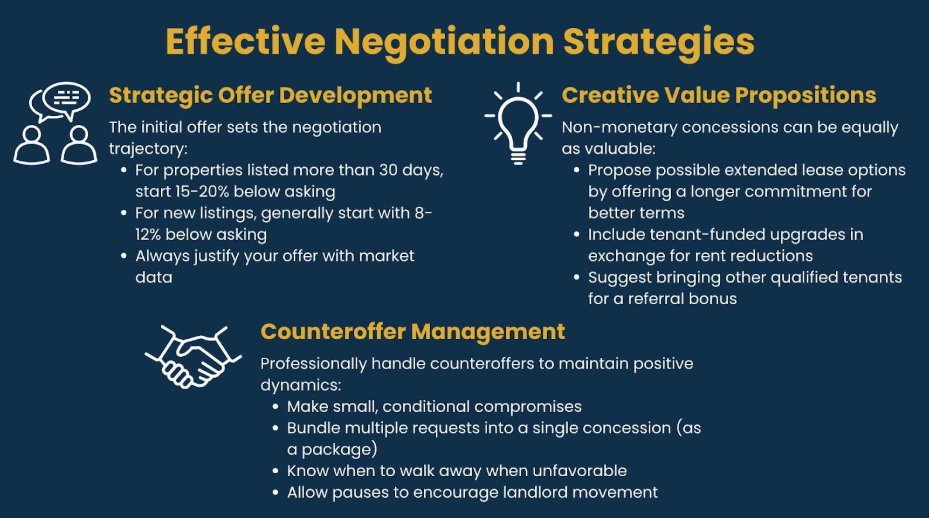
Effective Negotiation Strategies
Strategic Offer Development
The initial offer sets the negotiation trajectory:
For properties listed more than 30 days: Start 15-20% below asking
For new listings: Generally, start with 8-12% below asking
Always justify your offer with market data
Creative Value Propositions
Non-monetary concessions can be equally valuable:
Extended Lease Options: Offer longer commitment for better terms
Property Improvements: Propose tenant-funded upgrades in exchange for rent reductions
Referral Bonuses: Suggest bringing other qualified tenants
Counteroffer Management
Professional handling of counteroffers maintains positive dynamics:
Incremental Concessions: Make small, conditional compromises
Package Deals: Bundle multiple requests into a single concession
Walk Away Power: Know your absolute limits beforehand
Silence Technique: Allow pauses to encourage landlord movement
Legal and Contractual Considerations
Reviewing the Lease Agreement
Critical Lease Clauses
Maintenance: Who covers repairs?
Renewal terms: Automatic or renegotiated?
Ensuring Proper Documentation
Signed lease agreements: Verbal agreements are binding but hard to enforce, so ensure you protect yourself with paperwork in English and Thai.
Keep payment records: Bank transfers with clear memos
Inventory checklist: Photograph the property’s condition to avoid deposit disputes.
Communication logs: Document all agreements
Fraud Prevention Measures
Avoid common rental scams:
Virtual Tours Only: No physical property viewings allowed
Unregistered Agents: Verify credentials
Pressure Tactics: Beware of “today only” deals
Unusual Payment Requests: Avoid cash deposits without receipts via untraceable methods.
Cultural Nuances in Thai Rental Negotiations
Kreng Jai in Practice
The Thai concept of consideration manifests in rental negotiations through:
Indirect Communication: Suggest rather than demand
Compromise Orientation: Seek win-win solutions
Relationship Focus: Value long-term harmony over short-term gains
Hierarchy Awareness: Respect the landlord’s position
Local Intermediary Advantages
Engaging a Thai representative offers multiple benefits:
Language Bridge: Accurate translation of technical terms
Cultural Interpretation: Proper framing of requests
Market Knowledge: Access to off-market opportunities
Legal Navigation: Understanding of local regulations
Post-Negotiation Steps
Finalizing the Deal
Ensure a smooth transition to tenancy by using traceable bank transfers when giving the deposit, signing duplicate contracts with witnesses so both the tenant and the owner have a copy each, and documenting the condition and quantity when keys are handed over as well.
Ongoing Relationship Management
Maintain positive landlord relations by paying punctually and establishing reliability. Do also take care of the property to demonstrate responsible use as a tenant. Communicate with your owner from time to time to check in on their well-being, just not excessively. Lastly, if you plan on renewing, do begin discussions early so the owner has time to plan and prepare.
Conclusion
Mastering rental negotiations in Pattaya requires equal parts market knowledge, cultural awareness, and strategic thinking. By understanding seasonal patterns, preparing thoroughly, and employing respectful yet assertive negotiation tactics, you can secure exceptional terms for your house for rent in Pattaya. Approach landlords with confidence and respect, and you’ll unlock the best deals this vibrant city offers. With over 10 years of experience, our team at Pattaya Prestige Properties can assist you in finding your ideal home. Contact us today to inquire about our listed properties or for professional advice on renting in Pattaya. Otherwise, check out our other guide on Best Areas to Rent a Condo in Pattaya for Expats & Digital Nomads.
Please enter your username or email address. You will receive a link to create a new password via email.
Manage Consent
To provide the best experiences, we use technologies like cookies to store and/or access device information. Consenting to these technologies will allow us to process data such as browsing behavior or unique IDs on this site. Not consenting or withdrawing consent, may adversely affect certain features and functions.
Functional
Always active
The technical storage or access is strictly necessary for the legitimate purpose of enabling the use of a specific service explicitly requested by the subscriber or user, or for the sole purpose of carrying out the transmission of a communication over an electronic communications network.
Preferences
The technical storage or access is necessary for the legitimate purpose of storing preferences that are not requested by the subscriber or user.
Statistics
The technical storage or access that is used exclusively for statistical purposes.The technical storage or access that is used exclusively for anonymous statistical purposes. Without a subpoena, voluntary compliance on the part of your Internet Service Provider, or additional records from a third party, information stored or retrieved for this purpose alone cannot usually be used to identify you.
Marketing
The technical storage or access is required to create user profiles to send advertising, or to track the user on a website or across several websites for similar marketing purposes.