
A Pattaya condo rental contract is a legal agreement between a tenant and property owner. It explains the lease period, monthly rent, deposit, utility costs, maintenance responsibilities, building rules, and what happens when the tenancy ends.
Tenants should read the full contract before paying a deposit. Any promise about repairs, furniture, pets, fees, or deposit refunds should be included in writing.
What Should a Pattaya Condo Rental Contract Include?
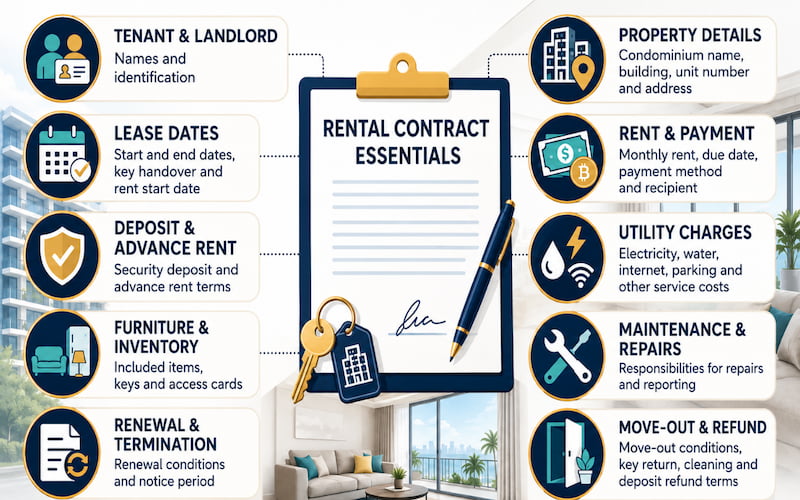
A complete contract should identify the tenant, landlord, and exact condominium unit. It should also cover:
- Lease start and end dates
- Monthly rent and payment terms
- Security deposit and advance rent
- Utility charges
- Maintenance responsibilities
- Furniture and appliance inventory
- Condominium rules
- Early termination and renewal
- Move-out and deposit-return conditions
Any parking space, storage area, internet package, furniture, or other service included in the rental should also be recorded.
How Can Tenants Verify the Landlord and Property Details?
The person signing the contract should be the legal owner or an authorized representative.
When an agent handles the agreement or collects payment, confirm who they represent. The landlord’s name should match the ownership or authorization documents, while the building, floor, address, and unit number should match the property viewed.
Do not sign a contract with blank spaces, incorrect details, or payment instructions involving an unrelated person without a clear explanation.
What Lease Dates Should Be Written in the Contract?
The lease should state exact start and end dates.
For example:
The tenancy begins on October 1, 2026, and ends on September 30, 2027.
It should also explain when the keys are handed over, when rent becomes payable, and when the condo must be returned.
Renewal should not be assumed. The contract should state how much notice is required and whether the landlord may change the rent or other terms.
What Should the Rent Clause Explain?
The rent clause should show the monthly amount in Thai baht, payment due date, accepted payment method, and payment recipient.
It should also explain any grace period or late-payment fee. The rent written in the contract must match the amount agreed with the landlord or agent.
Keep bank-transfer records and request receipts for cash payments.
Confirm Additional Monthly Costs
The advertised rent may not include:
- Electricity and water
- Internet
- Parking
- Cable television
- Cleaning
- Common-area fees
- Air-conditioning servicing
Each recurring cost should be clarified before signing.
How Should Deposits and Advance Rent Be Recorded?
Advance rent and the security deposit serve different purposes and should appear separately.
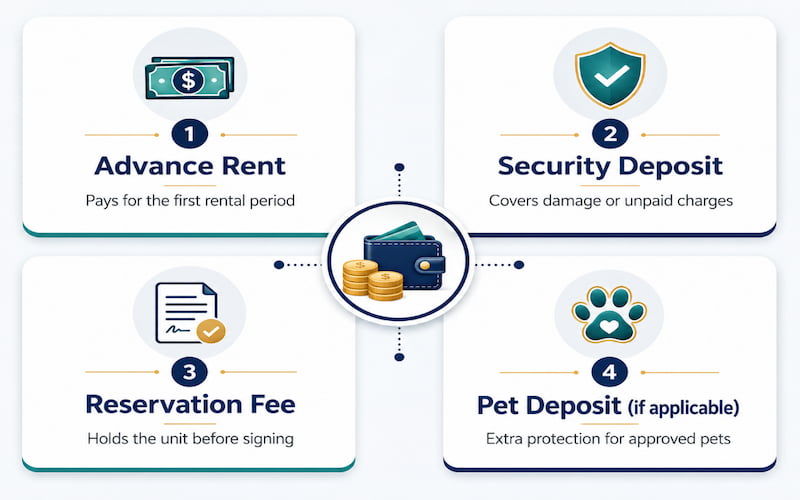
| Payment | Purpose |
| Advance rent | Pays for the first or agreed rental period |
| Security deposit | Covers unpaid charges or tenant-caused damage |
| Reservation fee | Holds the condo before the lease is signed |
| Pet deposit | Covers approved pet-related risks, where applicable |
The contract should state each amount, explain whether a reservation fee will be credited, and identify permitted deposit deductions.
It should also include a clear refund timeline and explain how final utility bills will be settled.
Thailand’s 2025 controlled-contract rules regulate qualifying residential rental businesses and require fairer, more transparent contract terms. However, their application may differ for privately owned condo units, so tenants should make every deposit condition clear in the lease.
What Is the Difference Between Damage and Normal Wear?
The contract should distinguish tenant-caused damage from ordinary deterioration.
Unpaid bills, missing furniture, large stains, lost access cards, and appliances damaged through misuse may justify deductions. Minor fading, light surface marks, and gradual furniture aging may be normal wear.
Any deduction should ideally be supported by photographs, invoices, repair quotations, or an itemized statement.
How Should Utility Charges Be Calculated?
The agreement should explain how electricity, water, internet, parking, and other services are billed.
Tenants may pay the provider directly, pay through the condominium office, or reimburse the landlord. The billing method and rate should be written clearly.
Before signing, confirm:
- Who issues each bill
- What electricity and water rates apply
- Whether administration charges are added
- Whether original bills can be reviewed
- How final charges are settled
Record the electricity and water meter readings when moving in and again when moving out.
The Office of the Consumer Protection Board states that qualifying rental businesses must charge water and electricity according to the applicable rates without adding a profit margin.
Who Is Responsible for Maintenance and Repairs?
The contract should divide repair duties fairly between the tenant and landlord.
| Usually handled by the tenant | Usually handled by the landlord |
| Basic cleaning | Structural defects |
| Replacing light bulbs | Major electrical faults |
| Tenant-caused blockages | Plumbing-system failures |
| Damage caused by misuse | Normal appliance breakdown |
| Reporting faults promptly | Major leaks or worn equipment |
Be cautious with wording that makes the tenant responsible for every repair.
Some contracts use a repair threshold, making the tenant responsible for work below a set amount. Check whether it applies per repair, whether normal appliance failures are included, and who selects the contractor.
Why Is the Furniture Inventory Important?
Most Pattaya condos are rented furnished, so the inventory is a key part of the contract.
It should identify the furniture, appliances, curtains, air-conditioning units, kitchen equipment, keys, and access cards supplied with the property. Existing damage should also be noted.
Record the Move-In Condition
On move-in day:
- Photograph every room.
- Record scratches, stains, and broken items.
- Test appliances and air-conditioning units.
- Count the keys and access cards.
- Photograph utility meters.
- Send the evidence to the landlord or agent.
Dated photographs and videos can help prevent disputes when the lease ends. Pattaya rental guides consistently recommend documenting the unit, furniture, appliances, walls, floors, and meter readings before moving in.
Which Condominium Rules Should Tenants Review?
Renting a private unit does not exempt the tenant from the condominium’s building regulations.
The juristic person may control:
- Noise
- Parking
- Pets
- Smoking
- Guests
- Balcony use
- Waste disposal
- Pool and gym access
- Moving furniture
- Renovations
- Short-term rentals
Request the current building rules before signing. The contract should also state who pays fines caused by the tenant, household members, guests, or contractors.
What Should the Contract Say About Occupants and Guests?
The lease should identify everyone permitted to live in the condo.
Some buildings require long-term occupants to register with management. There may also be rules covering overnight guests and maximum occupancy.
Tenants planning to live with a partner, family member, or colleague should include that person where required.
Subletting is usually prohibited without written approval. This may include renting the condo to another person or listing it on a short-term rental platform.
How Should Pet and Smoking Rules Be Written?
The contract should state clearly whether pets are allowed.
Where a pet is approved, the lease should record the type, breed, approximate size, and number of animals. Any extra deposit, cleaning obligation, or damage responsibility should also appear in writing.
Landlord approval may not be enough if the building has separate pet restrictions. Confirm permission from both the owner and condominium juristic person.
Smoking rules should specify whether smoking is prohibited inside the unit, on the balcony, in common areas, or throughout the development.
When Can the Landlord Enter the Condo?
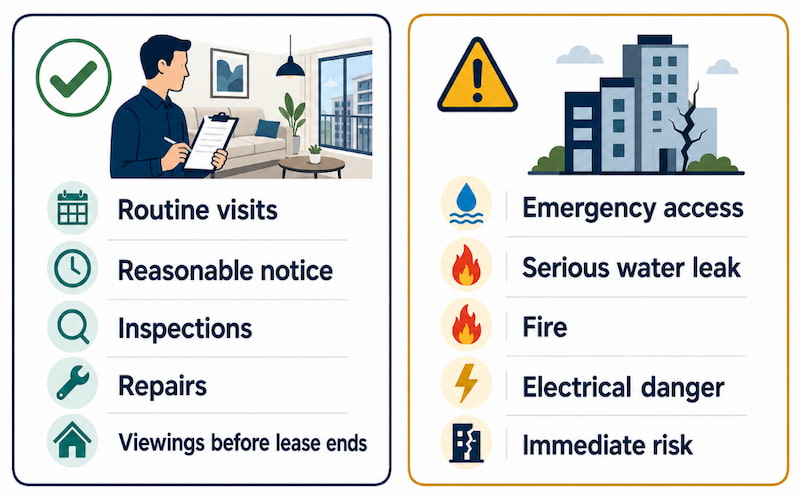
The contract should explain when the landlord, agent, or maintenance workers may access the unit.
Routine inspections should normally require reasonable notice. Immediate access may be permitted during a serious water leak, fire, electrical danger, or another genuine emergency.
Avoid clauses giving the landlord unrestricted entry at any time.
The agreement may also allow viewings for future tenants or buyers near the end of the lease, but the required notice should be stated.
What Happens If the Tenant Ends the Lease Early?
The early-termination clause should explain what happens when the tenant leaves before the agreed end date.
It should state:
- The required notice period
- Whether the deposit is forfeited
- Whether remaining rent is payable
- Whether a replacement tenant is allowed
- Whether a break clause applies
Tenants who may relocate for work should negotiate a break clause before signing rather than request one later.
The landlord’s right to terminate should also be limited to clear reasons, such as unpaid rent, serious damage, illegal activity, unauthorized occupants, prohibited pets, or repeated rule violations.
How Does Lease Renewal Work?
The renewal clause should explain how the tenant can extend the lease.
It should state the required notice, whether the rent may increase, whether a new agreement is needed, and what happens to the existing deposit.
A verbal statement that renewal “should be possible” does not guarantee the same rent or conditions. Any extension should be confirmed in writing.
What Should Happen When the Tenant Moves Out?
The lease should explain how the condo must be returned.
The tenant may need to remove personal belongings, clean the property, settle utilities, return keys and access cards, restore furniture, and repair tenant-caused damage.
Some contracts also require professional cleaning or air-conditioning servicing. Check whether these services are always mandatory or required only when needed.
The final inspection and deposit-return process should be clearly documented. Avoid wording that says the deposit will be returned “later” without a specific deadline.
What Should Tenants Check in a Bilingual Contract?
Many Pattaya rental contracts are written in Thai and English.
Both versions should contain the same:
- Names and property details
- Lease dates
- Rental amount
- Deposit terms
- Utility conditions
- Repair duties
- Termination clauses
- Refund deadlines
The agreement should identify which language takes priority if the wording conflicts.
Any handwritten addition should appear in both versions and be signed or initialled by both parties.
Which Contract Red Flags Should Tenants Avoid?
Pause before signing if the agreement contains:
- Blank spaces or incorrect unit details
- Unexplained charges
- No deposit-return deadline
- Unclear utility rates
- No furniture inventory
- Unrestricted landlord access
- Automatic loss of the full deposit
- Tenant responsibility for every repair
- Conflicting Thai and English clauses
- Verbal promises missing from the contract
- Pressure to sign immediately
A rental contract should reduce uncertainty. Any unclear term should be corrected before money is transferred.
What Should Tenants Confirm Before Signing?
Before signing a Pattaya condo rental contract, make sure:
- The landlord or representative is authorized
- The property details are correct
- The lease dates and rent match the agreement
- Deposits and deductions are explained
- Utility rates are clear
- Repair responsibilities are fair
- The inventory is complete
- Existing damage is documented
- Building rules have been reviewed
- Pet, smoking, guest, and subletting terms are written
- Early termination and renewal are clear
- Both language versions match
- You receive a complete signed copy
Conclusion
A Pattaya condo rental contract should clearly explain the rent, deposit, utilities, maintenance responsibilities, building rules, and the process for ending or renewing the tenancy. Tenants should resolve unclear terms before signing and keep copies of payments, inspections, and written agreements.
Tenants exploring Pattaya Condos for Rent can work with Pattaya Prestige Properties to compare suitable units and clarify important rental conditions before making a commitment. Reviewing the contract carefully can reduce the risk of unexpected charges, deposit disputes, and disagreements later.
FAQ
Is a Verbal Rental Agreement Enough in Pattaya?
A verbal agreement may be difficult to prove. Important conditions concerning rent, deposits, repairs, pets, and refunds should always be included in a signed contract.
Can a Landlord Keep the Full Security Deposit?
A landlord may deduct legitimate unpaid charges or tenant-caused damage, subject to the contract and applicable law. Tenants should request an itemized explanation and supporting evidence for deductions.
Who Normally Pays Common-Area Fees?
The property owner commonly pays the condominium’s regular common-area management fees, but tenants should confirm this in the contract. Parking, utilities, or additional services may be charged separately.
Should Tenants Sign Both Thai and English Versions?
Where both versions are provided, tenants should review and sign matching copies. The contract should also state which language takes priority if the wording differs.
Can a Tenant Leave Before the Lease Ends?
A tenant can leave, but financial consequences may apply. The early-termination clause should explain the notice period, deposit treatment, remaining rent, and whether a replacement tenant is allowed.